Key Takeaways
- Choose dining stops that fit your activities and neighborhood route.
- Make one meal the priority, then keep the other meals flexible.
- Balance an expensive reservation with simpler daytime food.
- Match the room, service style, and noise level to the occasion.
- Check menus, hours, reservations, and backup options before leaving.
A memorable New York City food day is less about checking off famous names and more about making choices that fit the way you actually want to spend the day. A list of best restaurants in New York can be a useful starting point, but the right place depends on where you will be, how much time you have, what you want to spend, and whether your group wants a quick bite or a long dinner.
Instead of building an itinerary around three distant reservations, choose one area and let the meals support the rest of your plans. You will spend less time in transit, avoid arriving hungry or rushed, and have more room for the unplanned coffee, bakery stop, or late-night slice that often becomes the highlight of the day.
Start With The Day, Not The Restaurant
Begin with the day’s main purpose. A museum visit, a Broadway show, a shopping afternoon, a waterfront walk, or a family outing can create different time limits and energy levels. A restaurant may be excellent, but it is not the best choice if reaching it requires a long detour before a timed ticket or evening performance.
A group with theater tickets may need a reliable early dinner near the venue. A couple with an open afternoon can travel farther for a slower lunch and a neighborhood walk. Starting with the schedule helps you choose food that improves the day rather than interrupts it.
Choose A Neighborhood That Fits The Route
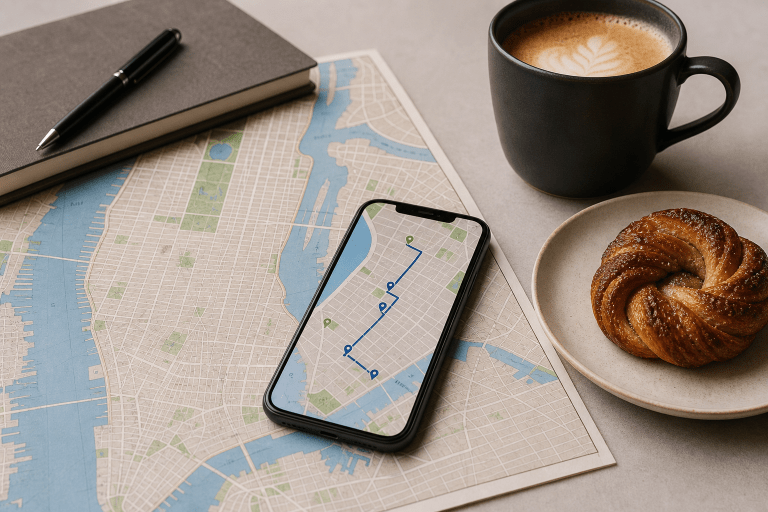
Use location as your first filter. Pick one main food area for each half of the day, then look for breakfast, lunch, snacks, and dinner within or near that zone. Lower Manhattan can suit a day of museums and walking, Midtown can simplify a show night, and outer-borough neighborhoods can work well when the food experience itself is the main event.
Before booking, check the actual walking distance and not just the neighborhood name. In New York, a route that looks close on a map can involve crowded avenues, long blocks, stairs, weather, or a subway transfer. Keep nearby alternatives in mind so one long wait does not reset the entire itinerary.
Set A Realistic Food Budget
A daily food budget should include more than menu prices. Account for breakfast, lunch, dinner, drinks, snacks, sales tax, tip, and any service charges. Checking current menus before reserving helps prevent an evening meal from taking more of the budget than expected.
- Low-cost day: Grab a quick breakfast, choose a filling casual lunch, and keep dinner simple.
- Balanced day: Have coffee and a light breakfast, eat a flexible lunch, then plan one meaningful dinner.
- Special-occasion day: Keep daytime meals modest and save both time and money for a longer evening reservation.
Do not treat every meal as a major event. One well-chosen splurge can feel more satisfying than three average meals that leave little room for dessert, drinks, or an unexpected stop.
Match The Meal To The Mood
The best setting is as important as the food. For date night, look for a comfortable room and enough time to talk. For families, prioritize easy seating, flexible menus, and a pace that avoids long waits. A group hangout benefits from shareable dishes and a layout where everyone can hear one another.
Solo diners may prefer counter seating, café tables, bars, or casual dining rooms where a reservation feels unnecessary. For celebrations, reserve ahead and understand the full cost. For a quick meal, focus on delis, food halls, counter service, and places near your next subway stop.
Build A Simple Three-Part Meal Plan
- Choose an anchor meal. This is the meal you care about most, whether it is a destination lunch or a planned dinner.
- Keep one meal flexible. Leave it open for a casual spot near your activities.
- Save room for an optional stop. Coffee, pastries, dessert, or a small snack can fit naturally around the day.
This structure prevents overplanning. Weather changes, delayed trains, tired feet, and surprise lines are normal in the city. A flexible plan lets you adjust without feeling as if the day has failed.
Plan For Dietary Needs And Group Preferences
Review menus before you commit, especially if you have vegetarian, vegan, gluten-free, halal, kosher, dairy-free, or allergy-related needs. When an allergy is serious, call before the visit and ask direct questions about preparation, shared fryers, and kitchen procedures. Understanding how allergens can transfer between foods can help diners communicate their needs clearly.
For mixed groups, send two or three realistic choices rather than asking everyone to search independently. A large menu does not automatically mean every person will have a strong option, so choose places that work for the whole table.
Use Transit, Walking, And Timing Wisely
Walking is often the best way to connect nearby food stops, but build in extra time for crowds, crossings, and weather. If you need to travel farther, check current subway maps and station information before leaving, especially when a reservation or show creates a firm deadline.
Eating a little earlier than the usual lunch or dinner rush can reduce waits and make the day calmer. Keep one backup nearby for every time-sensitive meal, and verify same-day hours because restaurants can change service schedules.
Avoid Common Dining Mistakes
- Crossing multiple neighborhoods to chase individual dishes.
- Booking far from the next activity without allowing travel time.
- Forgetting to budget for tax, tip, drinks, and service fees.
- Assuming a popular restaurant always accepts walk-ins.
- Choosing a loud room when the group wants conversation.
- Ordering too much at lunch and losing appetite for dinner.
Sample Food-Day Plans
For A First-Time Visitor
Start with breakfast near the hotel, eat lunch near the day’s biggest attraction, and reserve dinner close to the evening activity. Add one walkable dessert or snack stop rather than planning a fourth full meal.
For A Budget-Conscious Traveler
Choose a low-cost breakfast, find a filling lunch with flexible portions, and spend more only on the meal that matters most. Walking between nearby stops can save money and reveal places you would have missed underground.
For Families, Couples, And Solo Diners
Families should eat earlier and keep snack options handy. Couples should protect time for one relaxed meal and a nearby walk. Solo diners can make one destination meal the centerpiece, then rely on casual spots and counter seating for the rest.
Use A Quick Planning Checklist
- What is the main activity for the day?
- Which neighborhood keeps the route easy?
- Which meal matters most?
- What is the total food budget?
- Are there dietary needs or reservation requirements?
- What is the closest backup option?
- Is there time for a spontaneous snack or dessert?
A better New York City food day does not require the longest list or the hardest reservation. It needs a sensible route, a clear budget, and meals that fit the people at the table. Plan the essentials, then leave space for the city to surprise you.